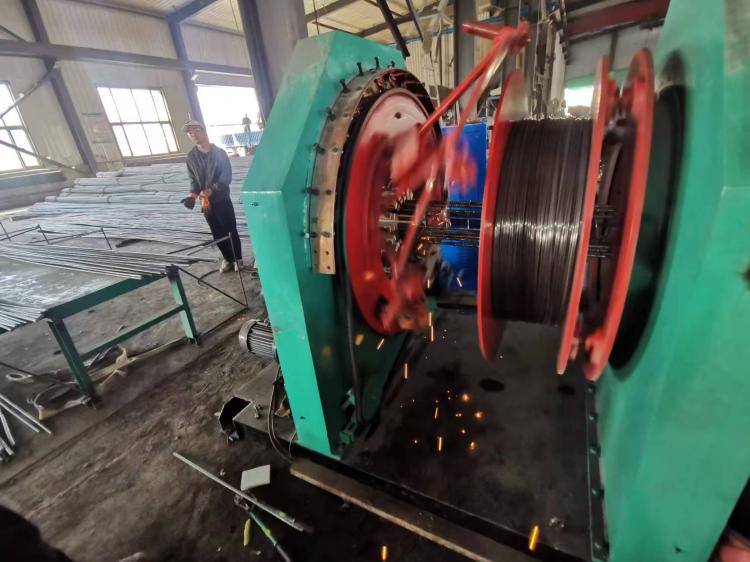
Here are four pressure checks to get your roll welder back on track.
Check 1: Left vs. Right Wheel Pressure
Your electric pole roll welder has two electrode wheels – one on each side of the seam. If one wheel has higher pressure than the other, the weld nugget forms unevenly. Use a simple paper test: place a strip of thermal paper between the wheels and close the head. The darkened area should be the same width on both sides. If one side is darker, adjust the individual cylinder regulators until they match.
Check 2: Pressure Drop During Rotation
A square pile roll welder or pole welder rotates the workpiece while welding. If your air supply line is too small or the compressor can’t keep up, pressure drops when the wheels hit an out-of-round section. Watch the pressure gauge during a full rotation. If it dips more than 5 PSI, upgrade your air line diameter or add a small accumulator tank near the welder.
Check 3: Worn Electrode Wheels
Electrode wheels wear into a concave shape over time. Instead of applying even pressure across the full width of the lap seam, they concentrate pressure on the edges. That creates a weak center weld. Check your wheels with a straightedge. If you see daylight under the center, dress or replace the wheels. A flat wheel makes a consistent weld.
Check 4: Parallel Alignment of Top and Bottom Wheels
Use a dial indicator on the top wheel shaft. Rotate the head. If the indicator moves more than 0.010 inches, the top and bottom wheels aren’t parallel. That uneven gap creates a “walking” weld seam that wanders side to side. Loosen the head bearings, shim as needed, and retighten.
Your electric pole roll welder will produce consistent seams when all four pressure checks pass. Do them monthly. Your scrap pile will shrink, and your poles will pass inspection every time.